


Treating an allergic reaction in school
The following flowchart summarises the symptoms of an allergic reaction, and the steps to take in managing a reaction:
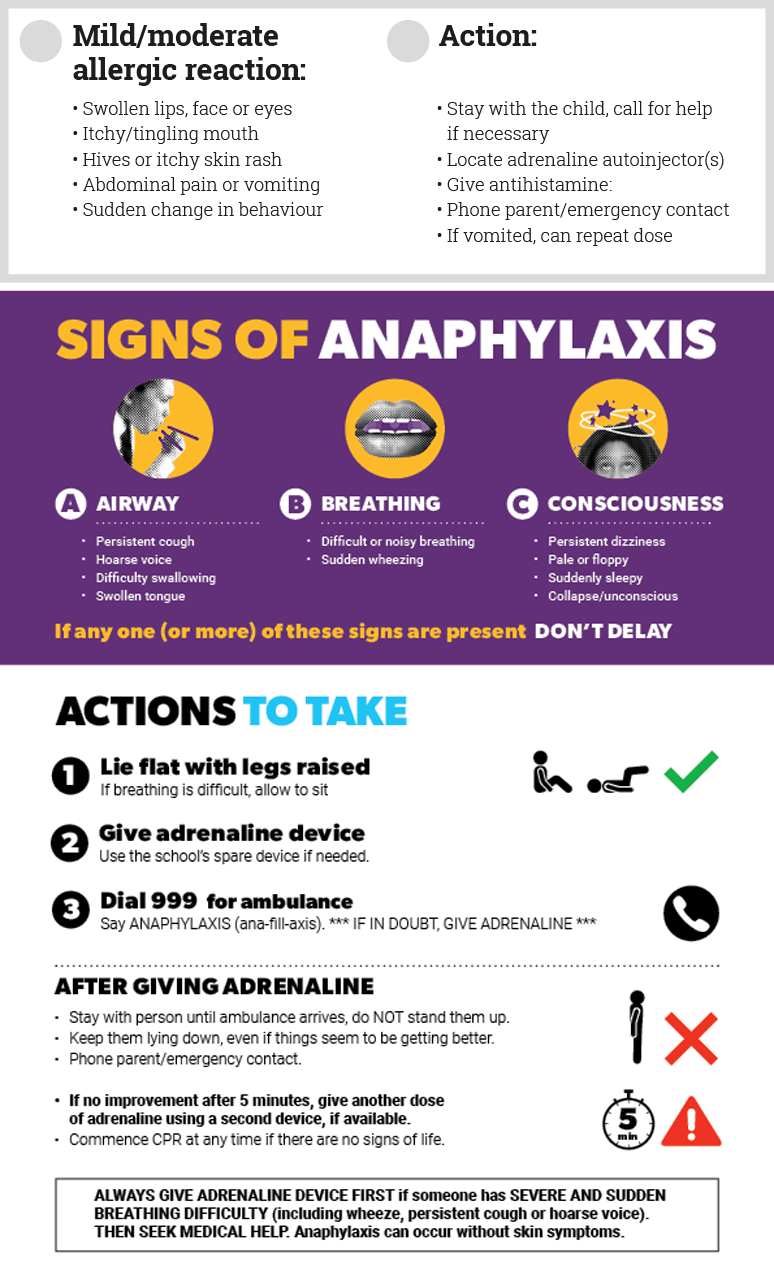
*Adrenaline Devices are prescribed to those at risk of a severe allergic reactions (anaphylaxis).
You should administer the child’s own Adrenaline Device if readily available. Schools can use their spare Adrenaline Device, but only in a child where:
- the school has a care plan confirming that the child is at risk of anaphylaxis
- the child has been prescribed an Adrenaline Device or a healthcare professional has authorised use of a spare Adrenaline Device in that child
- the child’s parent/guardian has also provided consent.
Mild-moderate symptoms:
- Generally respond to antihistamine medicines given by mouth.
- The pupil does not normally need to be sent home from school, or require urgent medical attention.
- Although most mild reactions resolve, occasionally they can worsen and develop into anaphylaxis: anyone having a mild-moderate (non-anaphylaxis) reaction should be monitored (e.g. in the first aid area) for any progression in symptoms.
- Younger children may find it difficult to explain how they feel during a reaction.
Anaphylaxis
If there are any ABC symptoms of anaphylaxis present, then give adrenaline without delay – see our guide on how to use an adrenaline device auto-injector. In severe cases, the reaction can progress within minutes into a life-threatening reaction.
Adrenaline treats both the symptoms of the reaction, and can also stop it from becoming worse. Other “allergy” medicines (such as antihistamines) can help with mild symptoms, but are not effective for anaphylaxis.
Outside hospital, adrenaline can be safely given by non-healthcare workers, either as an injection into the muscle using an adrenaline auto-injector (AAI) (e.g. EpiPen®, Jext®) or using a nasal adrenaline device (EURneffy) which does not have a needle.
Adrenaline can be lifesaving. Some reactions need more than one dose. People can initially improve but then deteriorate later. Therefore, always dial 999 and request an ambulance – even if there has been a good response to the adrenaline.
- Give clear and precise directions to the emergency operator, including the postcode of your location.
- Send someone outside to direct the ambulance paramedics when they arrive.
Anaphylaxis usually occurs together with more mild symptoms of an allergic reaction (such as an itchy mouth or skin rash), but can also happen on its own without any mild signs being present. Always give adrenaline FIRST (before other medicines such as inhalers) in someone with known food allergy who has sudden-onset breathing difficulties – even if there are no skin symptoms.
Delays in giving adrenaline are a common finding in fatal reactions. IF IN DOUBT, give adrenaline.
After giving Adrenaline:
- Do NOT move the pupil. Standing someone up with anaphylaxis can trigger cardiac arrest. Bring the Adrenaline Device to the pupil, not the other way round.
- Provide reassurance. The pupil should lie down with their legs raised (if the student is pregnant, lie them on their left hand side). If breathing is difficult, allow them to sit.
- Note the time the Adrenaline was given.
ALWAYS DIAL 999 AND REQUEST AN AMBULANCE IF AN ADRENALINE DEVICE IS USED
If the pupil’s condition does not improve 5 to 10 minutes after the initial injection, then give a second dose of adrenaline:
- Use another Adrenaline Device – Adrenaline Devices are single-use only. This can be the pupil’s own device, or the school’s “spare” Adrenaline Device.
- If you give a second dose, call the emergency services again to confirm that an ambulance has been dispatched.
When the paramedics arrive, tell them:
- if the child is known to have an allergy
- what might have caused this reaction e.g. recent food eaten
- the time the Adrenaline Device was given.
Once the child is stable:
- Remember to call the parent/guardian/carer (details should be on the pupil’s allergy plan)
- Note in the school’s records where and when the REACTION took place (e.g. PE lesson, playground, classroom), how much medicine was given, and by whom.