


How to use an adrenaline device
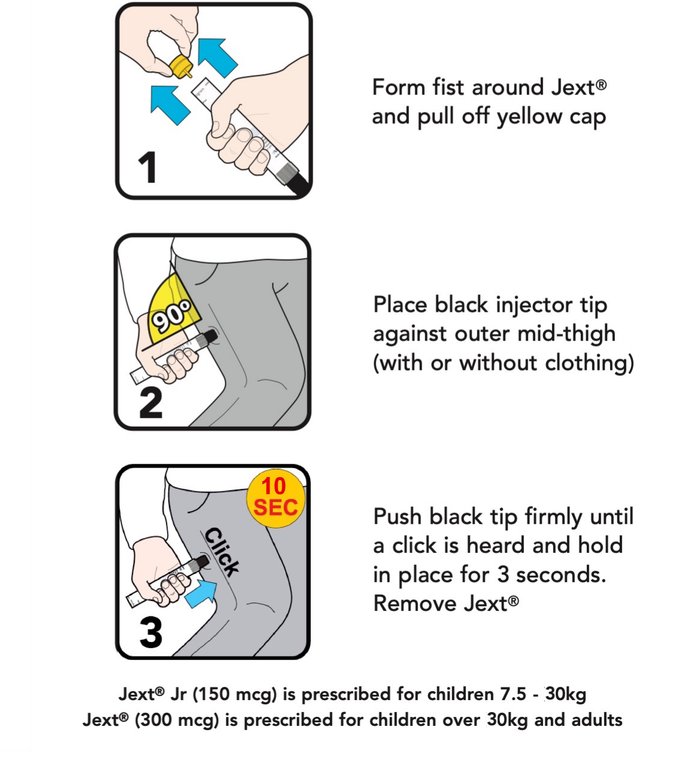
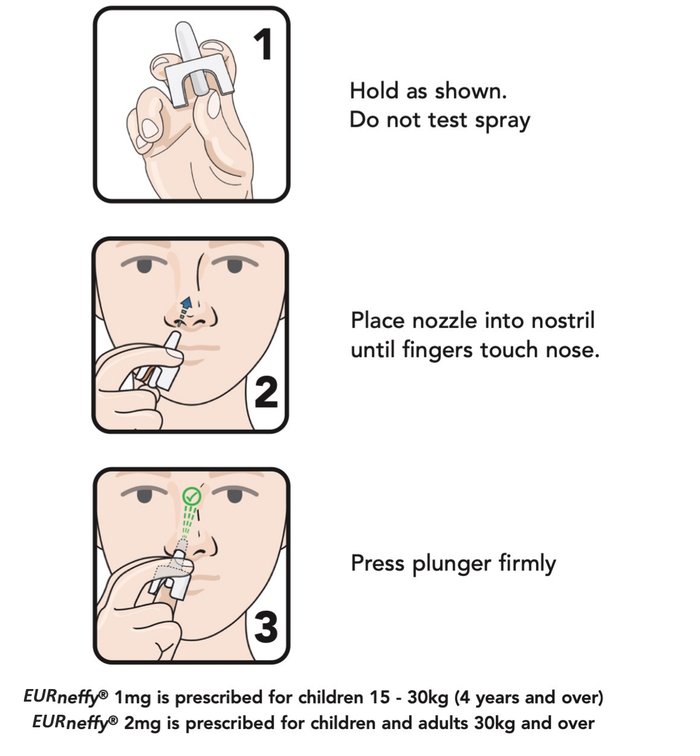
The treatment of anaphylaxis is adrenaline (epinephrine). This can be given using an autoinjector (e.g. EpiPen®, Jext®) into the outer thigh muscle in the leg, or into the nose with a special nasal device (EURneffy®).
Adrenaline treats both the symptoms of the reaction, and can also stop it from becoming worse. A dose of adrenaline is safe and potentially life-saving. Other “allergy” medicines (such as antihistamines) may help with mild symptoms, but are not effective for severe reactions (anaphylaxis).
Adrenaline autoinjectors can be administered through clothes. EURneffy is effective even if someone has a block nose or a cold.
IF IN DOUBT, GIVE ADRENALINE
There are 3 different adrenaline devices currently available on the UK market, available at 2 different doses (one for younger children, one for older children/adults):
| EpiPen | Jext | EURneffy |
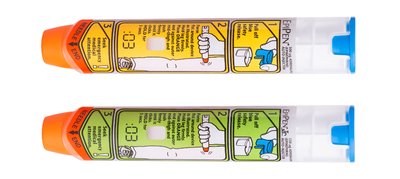 | 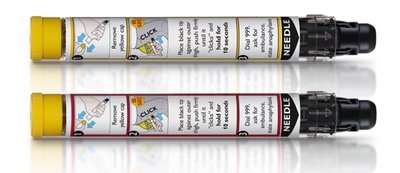 | 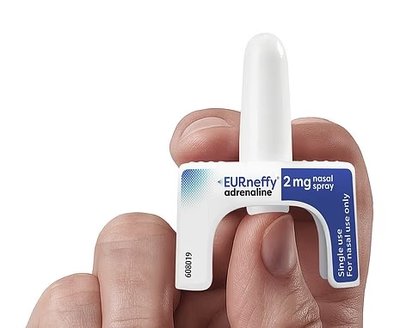 |
Autoinjector “pen”
| Autoinjector “pen”
| Nasal spray
|
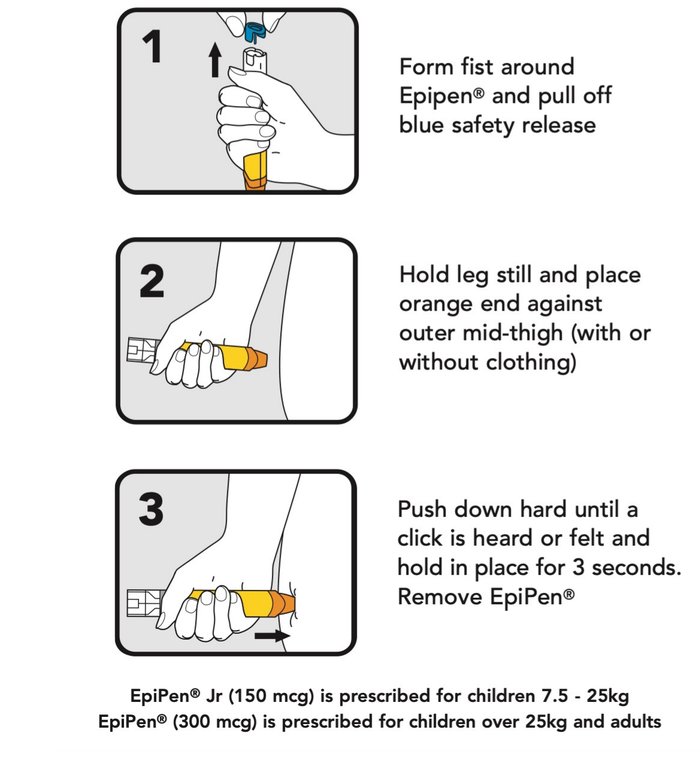 |  |  |
| Training video | Training video | Training video |
| Company website | Company website | Company website |
An A4 poster showing instructions for all 3 devices can be downloaded here.
NOTE: There are two ways to use an EpiPen: place/press (as shown above, and recommended by the BSACI) and swing/jab where the device is held about 10cm away from the leg and jabbed into the muscle. The place/press method is the Government-approved method in Australia/New Zealand for EpiPen.
Experience suggests that the latter is more painful for children and less-controlled, which might result in the injection not being given correctly.